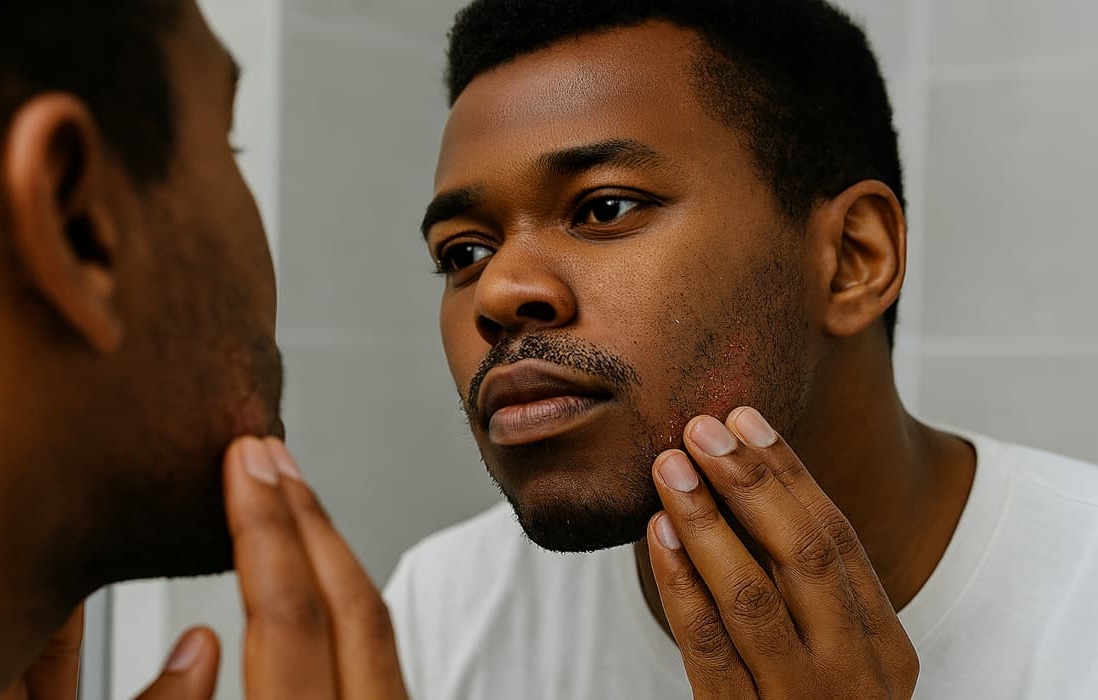
Frequent razor bumps often develop when short shaved hairs irritate the skin or curve back toward it. Better preparation and shaving technique can reduce that cycle, although some people remain prone to bumps because of their hair type and growth pattern.
The goal is not simply a closer shave. Shaving too closely can sometimes create more irritation.
Understand How Razor Bumps Develop
Razor bumps are often called shaving bumps, and the medical term pseudofolliculitis barbae is commonly used when hairs grow back into the skin after shaving. Coarse or tightly curled hair can be especially prone to this pattern.
Someone reviewing skin information online may encounter both razor burn and ingrown hairs. They can overlap, but redness from surface irritation is not always the same problem as hairs curving back into the skin.
Prepare the Hair Before the Razor Touches It
Hair is easier to cut after it has absorbed moisture. Shaving after a shower or using a warm, damp cloth beforehand can soften the hair and reduce the force needed from the razor.
The American Academy of Dermatology recommends wetting the skin and hair, applying shaving cream or gel, and shaving in the direction of hair growth. Its shaving guidance also advises rinsing the razor frequently and keeping it clean and dry between uses.
Use Light Pressure
Pressing firmly or repeatedly shaving the same patch may produce a closer result for a few hours but can increase irritation. Short, controlled strokes with adequate lubrication are usually kinder to the skin.
Follow the Direction of Hair Growth
Shaving against the grain cuts hair very close and may encourage certain hairs to retract or curve into the skin as they grow.
The AAD’s razor-bump recommendations emphasize identifying the direction of growth and shaving with it. Changing shaving habits can reduce the number and discomfort of bumps for some people.
General everyday safety guidance may discuss grooming precautions, but technique needs to be adapted to the actual direction and texture of your own hair.
| Shaving Habit | Possible Result | Better Adjustment |
|---|---|---|
| Dry shaving | More friction | Soften hair first |
| Against the grain | More ingrown hairs | Follow hair growth |
| Heavy pressure | Irritation and nicks | Use light strokes |
| Dull blade | Repeated pulling | Replace when needed |
Give Irritated Skin a Chance to Settle
If shaving causes bumps every time, shaving less closely or temporarily allowing the hair to grow may reduce repeated injury. Electric trimmers that leave a small amount of hair may work better for some people.
People reading everyday wellness topics may see many aftershave suggestions. Avoid introducing heavily fragranced or stinging products when the skin is already inflamed, because irritation can add to the problem.
Why a Closer Shave Isn’t Always Better
The smoothest possible shave is not necessarily the healthiest choice for bump-prone skin. Stretching the skin, pressing hard, or making repeated passes may cut hairs below the surrounding surface.
Picking at bumps is another common mistake. Digging out ingrown hairs can damage the skin and may contribute to dark marks, infection, or scarring. Persistent bumps are better managed by changing the shaving process or obtaining dermatologic advice.
When Should Razor Bumps Be Checked?
Seek medical evaluation when bumps become increasingly painful, develop substantial pus or drainage, spread with warmth and swelling, form deep nodules, or repeatedly leave raised scars.
The AAD notes that persistent razor bumps can cause lasting skin changes and recommends seeing a dermatologist when shaving adjustments do not provide adequate relief.
Frequently Asked Questions
Why do razor bumps appear after shaving?
A closely cut hair can irritate the follicle or curve back into nearby skin as it grows. The resulting inflammation can create small itchy, tender, or darker bumps.
Does shaving with the grain prevent every razor bump?
No. It can reduce irritation and ingrown hairs for many people, but hair curl, shaving frequency, blade type, and individual skin response also affect the result.
Should I squeeze an ingrown hair bump?
Squeezing or digging into bumps can injure the skin and increase inflammation. Persistent or deeply trapped hairs are better handled with safer grooming changes or professional treatment.
Change the Shave, Not Just the Aftershave
Frequent bumps are often a sign that the shaving method needs adjustment. Soften the hair first, use good lubrication, follow the growth direction, avoid excessive pressure, and give irritated areas time to recover.
If bumps continue despite careful technique or begin causing scars, a dermatologist can discuss additional approaches based on your hair and skin.
This article is for general informational purposes and is not a substitute for professional medical advice, diagnosis, or treatment.

