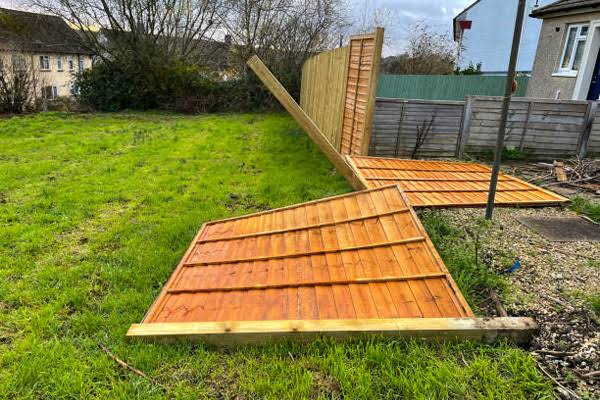
Fence panels rarely fail without warning. Loose boards, leaning posts, rusted fixings, and repeated movement in windy weather often appear before a section finally breaks. Strengthening weak fence panels early can reduce the chance of a minor defect turning into several damaged panels after a storm.
Start by checking whether the weakness is in the panel itself, its fixings, or the supporting posts.
Inspect the Posts Before Repairing Panels
A fence panel is only as stable as the posts holding it. Push gently against the fence and watch where movement begins. If the post shifts at ground level, tightening panel screws alone won’t solve the main problem.
Readers comparing practical property projects may find plenty of cosmetic upgrade ideas, but structural movement should be dealt with first.
Look for timber decay, cracked concrete, loose post supports, corrosion, or soil erosion around the base.
Secure Loose Boards and Rails
Wind places repeated pressure on panels. Loose boards can act like small levers, transferring movement into rails and posts whenever gusts arrive.
General property care reading can inspire maintenance routines, although fence fasteners should be chosen for exterior use and compatibility with the existing material.
Replace missing or badly corroded screws and nails. Where a board has split around an old fixing, simply installing a larger screw into damaged timber may not hold for long.
Check the Rails Behind the Panel
Horizontal rails can crack or pull away while the visible boards still look acceptable. Inspect both sides whenever possible.
Reduce Unnecessary Wind Resistance
Solid fencing catches more wind than open fencing. You shouldn’t randomly cut holes into existing panels, but nearby overgrown vegetation can sometimes push against fencing and increase movement during storms.
For appearance ideas around fences and boundaries, outdoor surface inspiration may be useful. Keep decorative additions light enough that they don’t place unnecessary load on already stressed panels.
| Warning Sign | Likely Problem | Action to Consider |
|---|---|---|
| Panel rattles | Loose fasteners | Secure fixings |
| Fence leans | Weak post | Inspect base |
| Rail is split | Structural damage | Repair or replace rail |
| Board is rotten | Moisture deterioration | Replace damaged timber |
Reinforce Before Bad Weather Arrives
Temporary reinforcement can help reduce movement while permanent repairs are planned. However, braces should not create trip hazards or transfer force to another weak part of the fence.
Check gates too. A sagging or poorly latched gate can swing violently in strong winds and damage posts or neighboring panels.
Clear loose garden objects from nearby areas before severe weather because furniture, branches, and containers can strike fencing.
Repairs That Give a False Sense of Security
Attaching a loose panel to a rotten post is one of the least effective repairs. The panel may feel firmer briefly while the underlying support continues deteriorating.
Excessive rigid bracing can also shift wind load rather than solving it. Another mistake is ignoring moisture around post bases. Constantly wet soil, leaking gutters, or vegetation packed around timber can accelerate deterioration and shorten the life of a repair.
Frequently Asked Questions
Can I strengthen a fence without replacing the panels?
Often, yes. Loose fixings, damaged rails, or minor movement may be repairable if the posts and main panel materials remain sound.
How do I know whether a fence post is failing?
Movement at ground level, visible rot, cracks, leaning, or loose surrounding concrete can indicate that the post needs closer inspection.
Should fence repairs be completed before a storm?
Known weaknesses are best addressed before severe weather arrives. Temporary measures may help, but damaged structural components should receive a proper repair.
Deal With Movement Before It Spreads
Inspect the whole fence rather than focusing only on the loosest board. Stable posts, secure rails, sound fasteners, and controlled vegetation work together to resist wind. Correcting small weaknesses early can prevent one moving panel from placing extra strain on neighboring sections when strong weather arrives.

