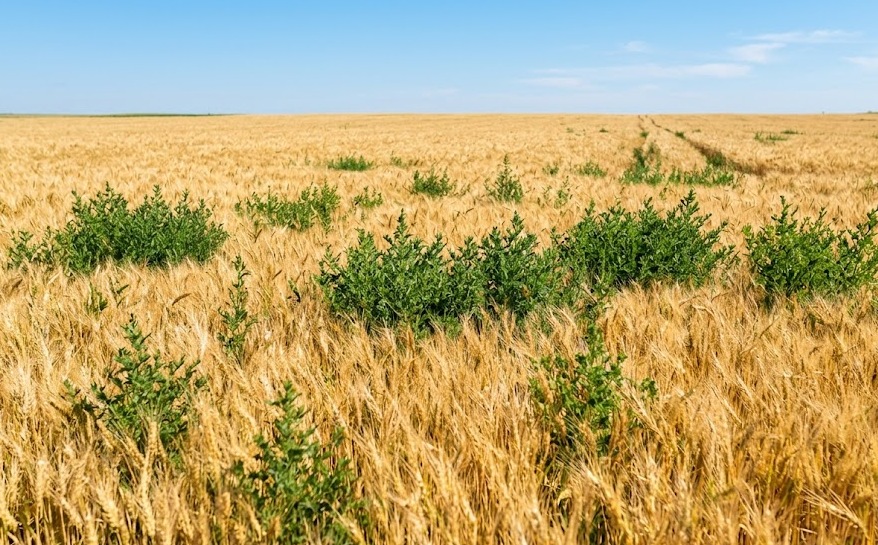
The Canadian prairies are currently being traversed by one of the most aggressive adversaries in modern agriculture. Kochia is no longer just a common problem; it is a biological powerhouse that has evolved to survive multiple control methods. When a high-performing broadleaf herbicide is selected for a cereal program, the choice is often driven by a need to stop this specific weed from dominating the landscape. The stakes are particularly high in 2026, as the “tumbleweed” spread of resistant seeds is threatening the long-term value of countless fields.
The tumbleweed effect and seed bank management
The survival of a single plant is often underestimated, yet the consequences are felt for a decade. A mature kochia plant is capable of producing up to 100,000 seeds, which are then dispersed across several miles as the plant breaks off and tumbles in the wind. This “kochia trail” is a visible map of future complications, as the seeds are deposited into the soil to await the next growing season.
A seed bank disaster is being created when these resistant escapes are left uncontrolled. Because the seeds are highly viable and the plants are prolific, a small patch in a single corner can quickly become a field-wide infestation within just two seasons. Effective management is required not just for the current yield, but to preserve the productivity of the land for the next generation of growers.
Why a “tag team” approach is required
The biological complexity of kochia has rendered many single-chemistry solutions obsolete. Resistance to Group 2, Group 4, and Group 9 (Glyphosate) is now considered the baseline for many populations. To achieve a successful “clean-up” in cereal crops, a combination of multiple Modes of Action (MOA) is necessitated.
Oxbow® delivers dependable broadleaf weed control by combining two proven modes of action—Group 4 and Group 6—in a single in-crop solution.
- Growth regulation stress (Group 4): Synthetic auxin activity disrupts normal plant growth processes, leading to abnormal development and reduced competitiveness in susceptible broadleaf weeds.
- Photosynthetic disruption (Group 6): Contact activity interferes with photosynthesis in green plant tissue, resulting in rapid injury to emerged weeds.
- Multiple modes of action: Using two distinct herbicide groups helps improve control consistency across a broad weed spectrum and supports resistance-management best practices.
With fast activity, flexible application timing, and multiple modes of action, Oxbow® is a reliable choice for managing challenging broadleaf weeds in cereals.
The role of oxbow in cereal programs
Oxbow is a specific Group 4 and 6 “tag team” chemistry that is designed to knock out biotypes that other products frequently miss. By utilizing this combination, a broader spectrum of weeds is addressed, ensuring that the crop is given the best possible start.
Oxbow is appreciated for its flexibility in application timing and its high level of crop safety. However, its most significant value is found in its ability to prevent the formation of new kochia trails. When the weeds are controlled before they can reach the “tumble” stage, the spread of resistant genetics is effectively halted.
Strategic investment in crop protection
In the current economic climate, the selection of a chemical program is sometimes viewed as a simple seasonal expense. However, crop protection in Canada is increasingly being reframed as a long-term strategic investment. The cost of a high-quality application is far lower than the cost of managing a resistant seed bank for the next ten years.
By creating a clean field, you set yourself up for success for seasons to come. Starting with a clean seedbed each season allows for better yields and less weed competition at crucial moments in the growing season.
The 2026 season is defined by the need for precision and power. While kochia continues to evolve, the tools available to growers are also becoming more sophisticated. By understanding the biology of the weed and the chemistry of the solution, a clean field can still be achieved. The era of relying on a single “silver bullet” has passed, and the necessity of a tag team approach is now clear. Through the use of products like Oxbow and a commitment to rigorous seed bank management, the productivity of the Canadian Prairies can be secured. The trail of the tumbleweed is being shortened, one field at a time.